
5 Putting Drills With Alignment Sticks (and the One Thing They Can't Fix)
The best putting drills with alignment sticks — for start line, stroke path, and setup — plus the one thing no alignment stick can train: face control and pace.
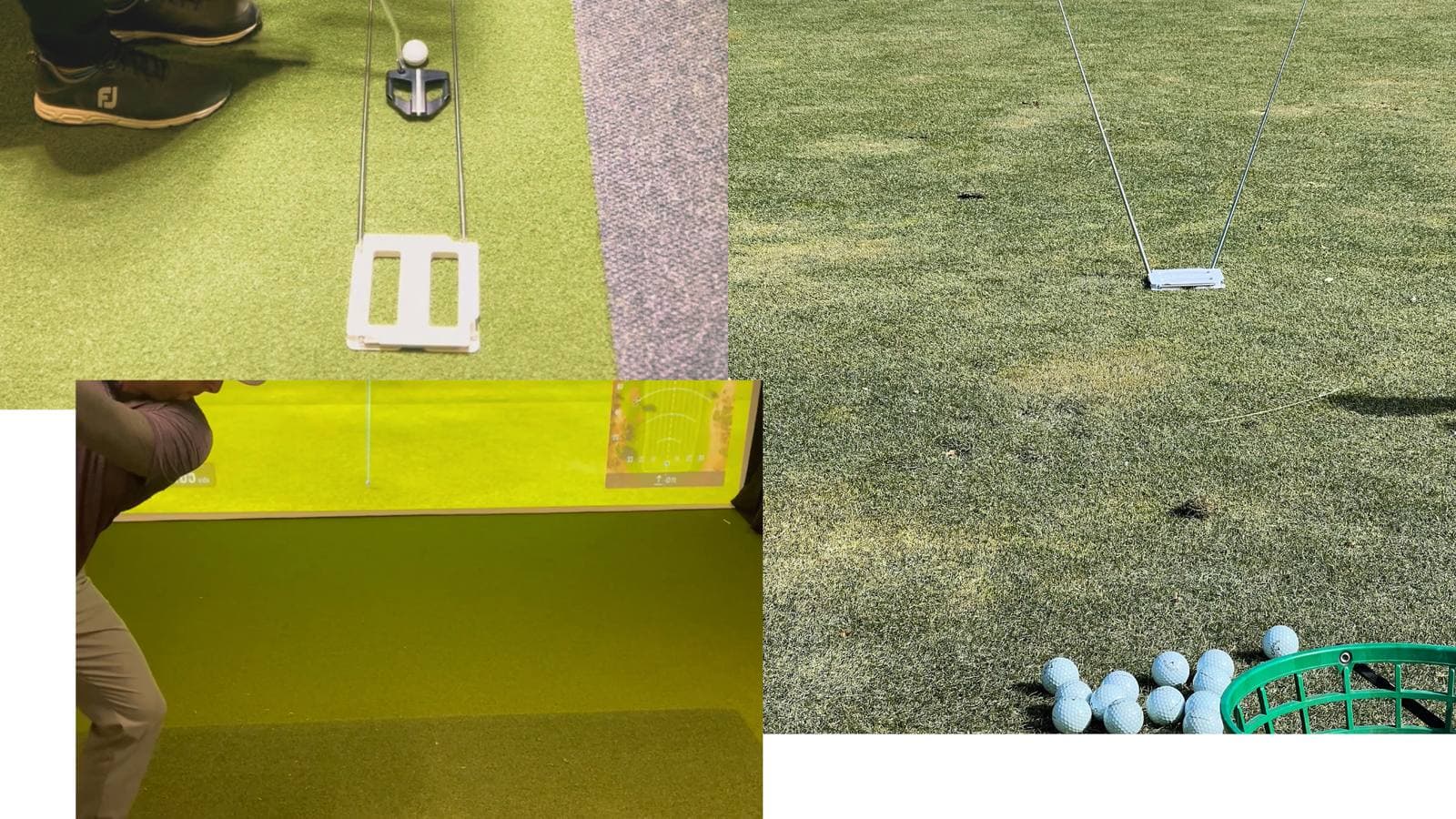
Alignment sticks are the cheapest, most versatile putting aid you already own — for one half of putting. The five putting drills with alignment sticks below sharpen your start line, stroke path, and setup, the things a straight reference on the ground is perfect for. They're simple, they work on any flat surface, and they cost nothing. But it's worth knowing up front what a stick can't do — because that gap is exactly where most golfers stay stuck.
What alignment sticks are great at (and what they're not)
A stick on the ground gives you a true straight line. That makes it excellent for aim, start line, stroke path, and setup checks — anything about where your body and the putter are pointing.
What a stick can't tell you is what the putter face is doing at impact, or how far a given stroke rolls the ball. Those two — face and pace — decide whether putts actually drop, and no alignment stick measures either. Keep that in mind as you run the drills.
Drill 1: The channel (stroke path)
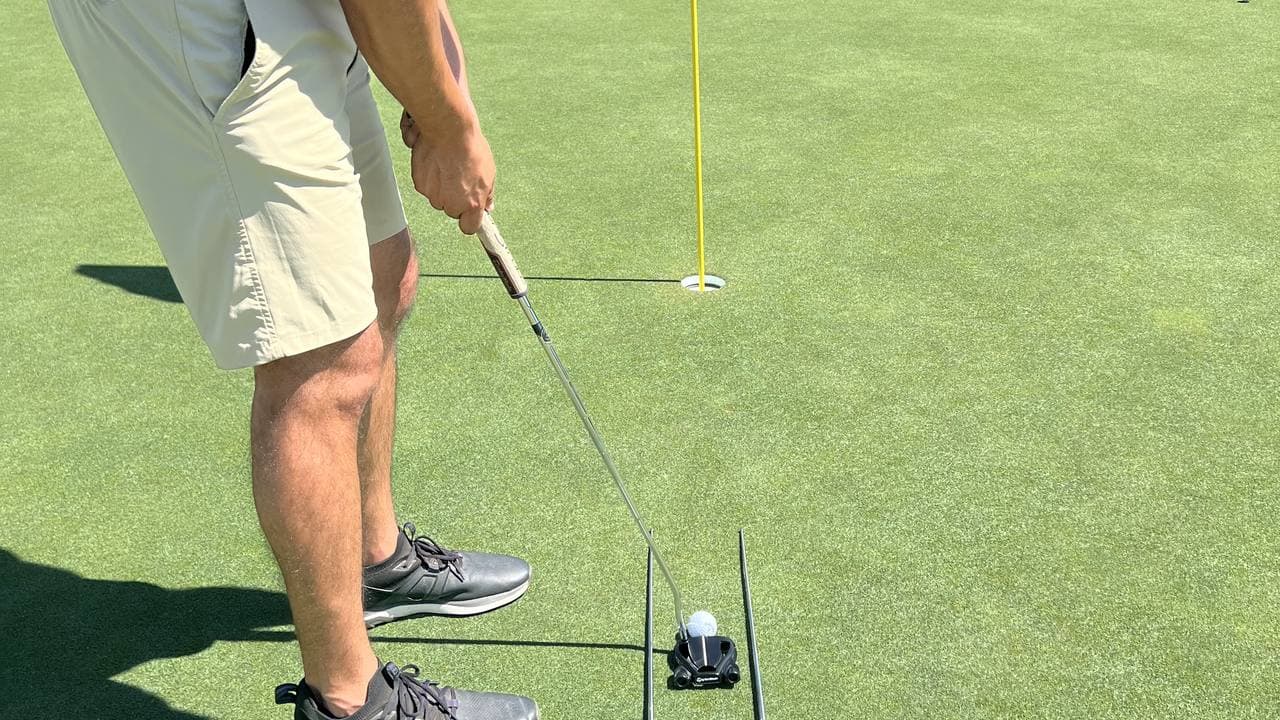
Lay two sticks on the ground just outside the heel and toe of your putter, forming a narrow channel on a straight putt. Stroke the ball down the channel without bumping either stick. It trains a straight-back, straight-through path and instantly exposes a stroke that arcs too much or cuts across the ball.
Drill 2: The start-line stick (start line + aim)
Lay a single stick on the ground pointing down your target line and set the ball just beside it. Roll putts that start parallel to the stick. This is the fastest way to find out that your eyes and your aim disagree — most golfers set up aimed somewhere other than where they think.
Drill 3: The eye-line check (setup)
Set a stick across your stance, parallel to your target line, and look down. It shows whether your eyes are over the ball and your shoulders are square — setup errors that quietly send putts offline before the stroke even starts. Two minutes of this fixes more misses than any stroke tip.
Drill 4: The chopsticks pendulum (quiet stroke)
Tuck a stick (or two) lightly under your forearms against your torso and make your stroke keeping the stick connected to your body. It links the putter to your shoulders and kills the wristy flip that throws the face out of square. A clean, connected pendulum is what makes the short ones automatic.
Drill 5: The pace gate (speed)
Lay a stick on the ground a foot or so behind the hole as a backboard. Putt from 15–20 feet and try to finish between the hole and the stick — never short, never past the stick. It's the closest a stick gets to training pace: a rough target zone. Useful, but notice it's still your feel doing the work, not a measurement.
Where alignment sticks fall short for putting
Run all five and you'll have a sharper line and a quieter stroke. What you still won't have is feedback on the two things that decide makes: is the face square at impact, and how big a stroke equals 20 feet of roll? A stick lies flat on the ground — it can't track the putter face, and the pace gate is still a guess.
That's the gap AimPutt is built to close. It's a 36-inch 6061-T6 aluminum bar: the top rail gives the putter head a surface to track against, training stroke path and a square face together — the channel and start-line drills in one reference. The bottom rail carries a laser-etched pace chart that maps backswing length to roll-out distance, so pace becomes a number you can repeat instead of a feel you re-guess. The alignment-stick drills, upgraded into one tool, ten minutes a day.
Alignment stick putting drills FAQ
Are alignment sticks good for putting? Yes — for start line, stroke path, aim, and setup. Their limit is that they can't tell you what the putter face is doing at impact or calibrate your pace, which is where most putts are actually won or lost.
What's the best alignment stick putting drill? The channel drill: two sticks just outside the heel and toe, stroke the ball through without touching either. It trains a straight path with instant, unforgiving feedback.
Can I do alignment stick putting drills at home? Yes. Every drill here works on a flat indoor surface. For a full no-green routine, see our guide to putting practice at home.
How many alignment sticks do I need for putting? Two covers everything — the channel and chopsticks drills use a pair, while the start-line, eye-line, and pace drills need just one.
Do alignment sticks help with putting speed? Only loosely. A stick can mark a target zone (the pace gate), but it doesn't measure how far a given stroke rolls the ball — so distance control still comes down to feel unless you add a real pace reference.
Want the line drills and a real pace reference in one tool? Pre-order AimPutt - buy one, get one free. Estimated shipping is mid-October 2026.
Related reading: 7 Putting Practice Drills That Actually Lower Your Scores · The 15-Minute Putting Practice Routine · How AimPutt Works