
Putting Practice at Home: What to Train When You Don't Have a Green
Putting practice at home doesn't need a green or even a mat. Here's exactly what you can train indoors — start line, face, and pace — plus a 15-minute routine.
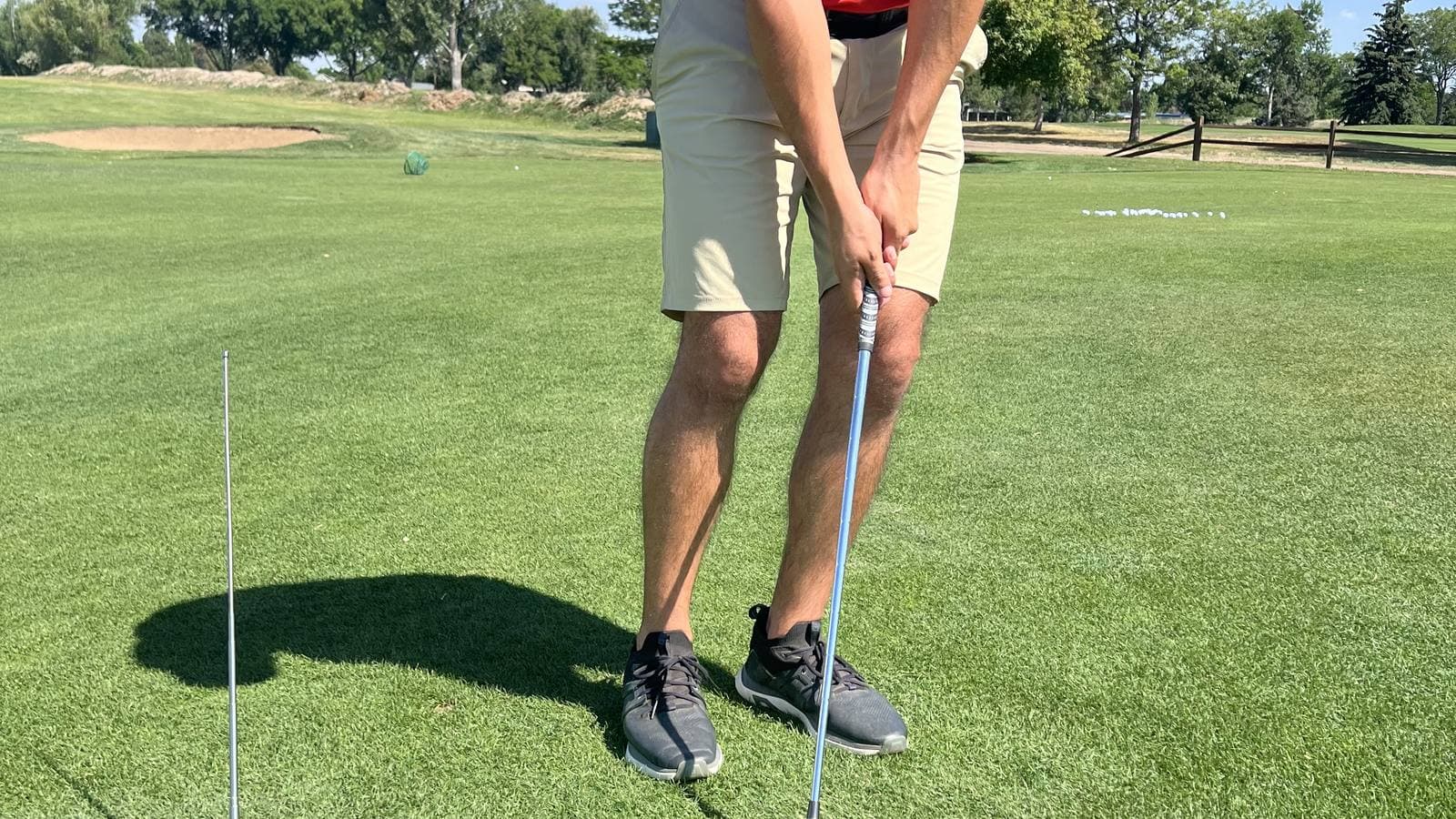
You don't need a putting green — or even a putting mat — to get better at putting at home. The skills that actually drop scores (start line, a square face, and pace) all train on any flat indoor surface. The only thing you can't practice at home is true green-reading. So putting practice at home comes down to one question: are you training the things that transfer? Here's exactly what to work on, a 15-minute routine, and why most of the gear you think you need doesn't matter.
What you can (and can't) train at home
On carpet or a hard floor, you can fully train the mechanics behind a huge share of your strokes — putting is often around 40% of a round:
- Start line — does the ball launch where you aimed?
- Face control — is the putter square at impact?
- Stroke path — does the putter track straight back and through?
- Pace — how far a given stroke rolls the ball. This is the big one.
What you can't train at home is green-reading — real slope, grain, and green speed. That needs a course. Everything else is fair game on your living-room floor.
Do you need a putting mat? No.
Most "putting practice at home" advice is really "buy this putting mat." You don't need one. A mat adds a hole and a consistent roll, which is nice — but it doesn't train anything a flat floor can't. A glass on its side makes a fine target; if you want a repeatable reference, you can build a DIY putting aid for a few dollars.
One real caveat: plush carpet rolls slow and inconsistent, which wrecks pace work. A low-pile rug, a hard floor, or a mat gives a truer roll. Match the surface to the skill — line drills work anywhere, but pace drills need a consistent roll.
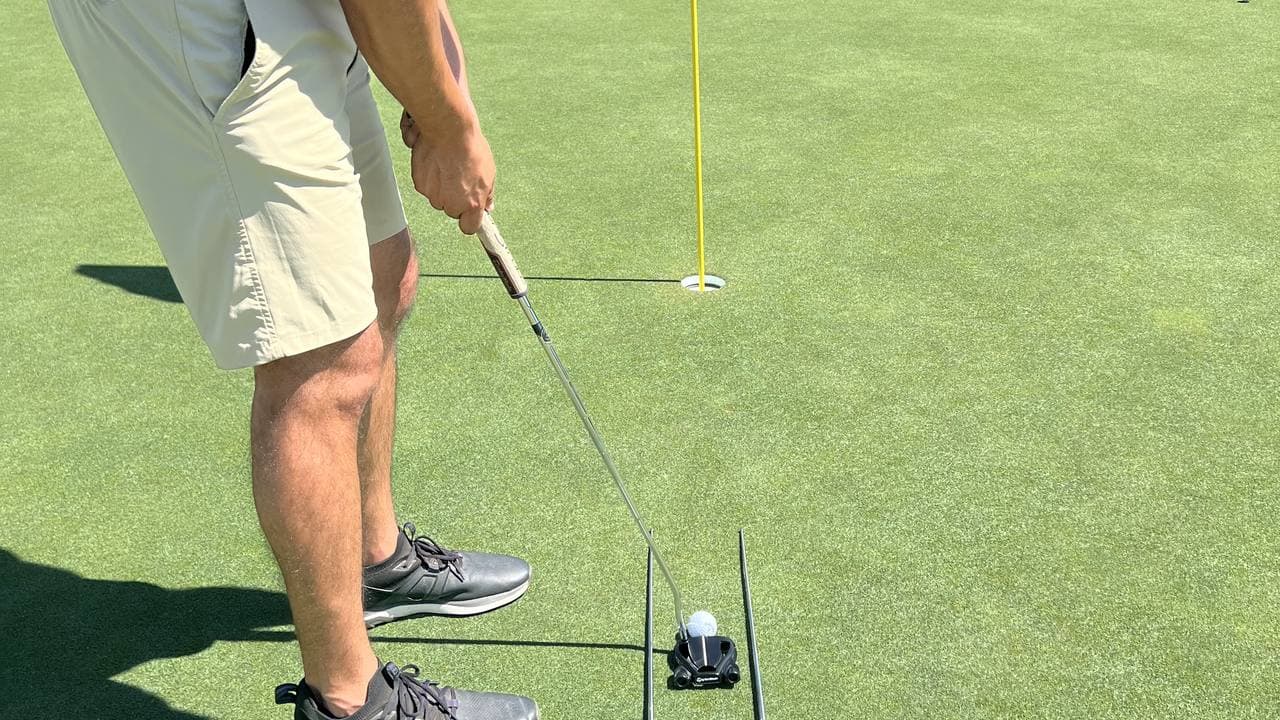
The 15-minute at-home putting routine
A structured 15 minutes beats an hour of aimless rolling. Run this three or four times a week:
- Gate — 4 min (start line + face). Two objects a putter-head apart, a foot ahead of the ball. Roll through clean, ten in a row.
- Path — 3 min (stroke). A board, level, or alignment stick along your toe line; stroke parallel to it without bumping it.
- Ladder — 5 min (pace). Mark distances at roughly 10, 20, and 30 feet (or paces) and finish each putt beside its marker, not at a hole.
- Short circle — 3 min (confidence). Six balls in a ring three feet out; make all six, restart on a miss.
For the full menu these come from, see 7 putting practice drills that actually lower your scores.
The mistakes that waste home practice
- Only practicing makeable putts. Endless 4-footers train nothing about pace.
- Plush carpet. Inconsistent roll makes pace feedback meaningless.
- No feedback loop. Rolling balls with no gate, line, or reference is just exercise.
- All line, no pace. Line gets the attention; pace causes the three-putts.
The one thing home practice usually misses
Home setups are great for line and weak for pace. You can eyeball a gate, but nothing tells you that this backswing equals a 20-foot roll — so pace stays a guess, and pace is what leaves you a tap-in instead of a three-putt.
That gap is exactly what AimPutt closes. It's a 36-inch 6061-T6 aluminum bar: the top rail trains stroke path and a square face, and the bottom rail carries a laser-etched pace chart that maps backswing length to roll-out distance — calibrated pace on any flat surface, no green and no mat. Ten minutes a day, indoors.
Putting practice at home FAQ
Can you really get better at putting at home? Yes. Start line, face control, stroke path, and pace all train indoors — and they're the mechanics behind most of your putts. Only green-reading needs a real course.
Do I need a putting mat to practice at home? No. A mat adds a hole and a consistent roll, but it doesn't train the skills. A flat low-pile surface plus a gate and a pace reference covers everything that matters.
What's the best surface for indoor putting practice? A low-pile rug, a hard floor, or a putting mat. Avoid thick plush carpet — it rolls slow and inconsistent, which ruins pace work.
How long should I practice putting at home? Fifteen focused minutes beats an hour of aimless rolling. Two line drills plus one pace drill, a few times a week, is plenty.
Can putting practice at home actually lower my scores? Yes — putting is often around 40% of your strokes, and the home-trainable parts (line and pace) are where most amateurs leak the most.
Want a putting station that trains pace, not just line? Pre-order AimPutt - buy one, get one free. Estimated shipping is mid-October 2026.
Related reading: 7 Putting Practice Drills That Actually Lower Your Scores · How AimPutt Works