
7 Putting Practice Drills That Actually Lower Your Scores
The putting practice drills that fix start line, face control, and distance — and the ones that just waste range balls. Do these at home in 15 minutes a day.
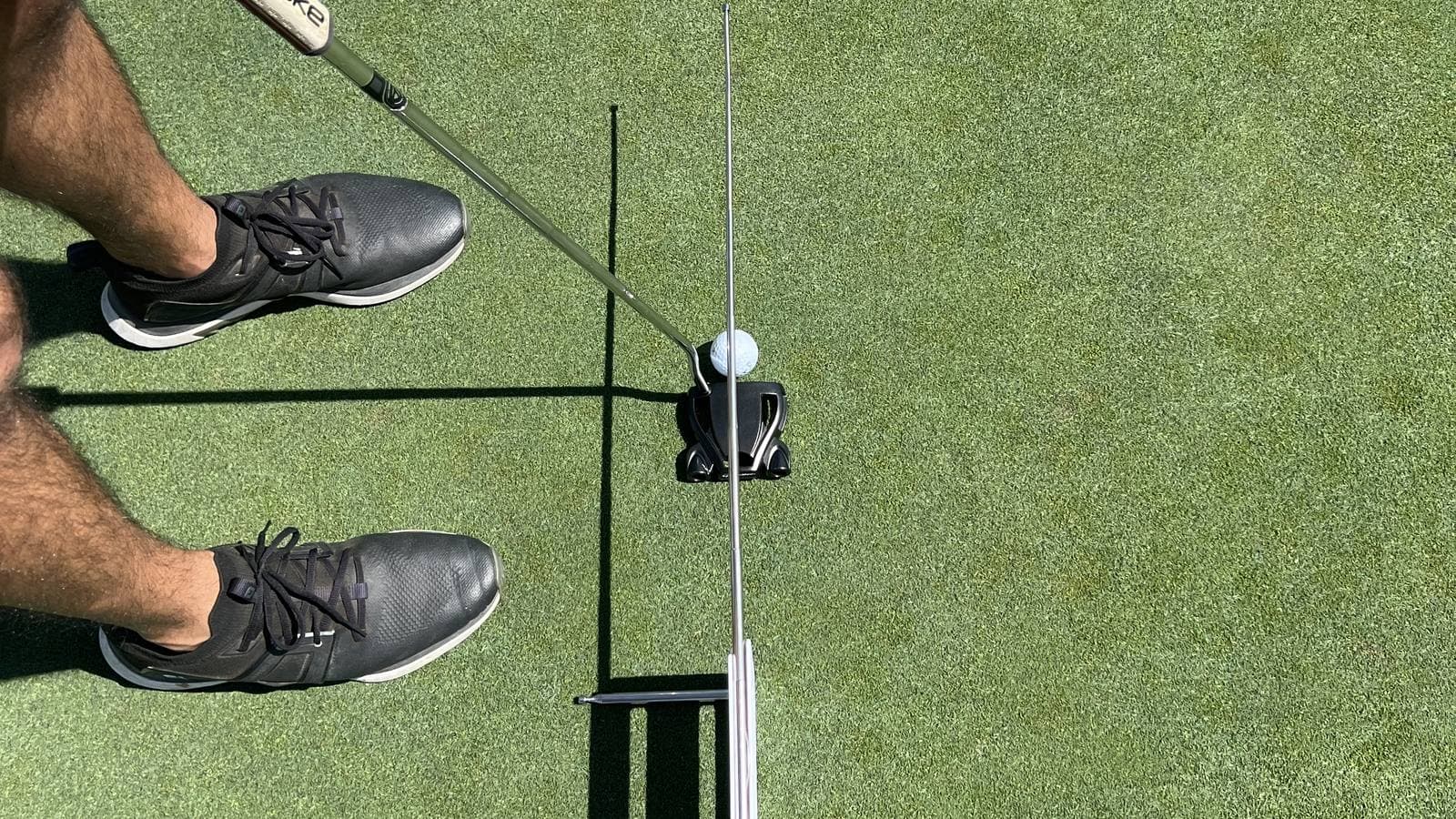
Most putting practice doesn't make you better. It makes you tired. If you want putting practice drills that actually move your scores, you need drills that isolate the three things that decide every putt: start line, face angle at impact, and distance control. Everything else is noise. Below are seven drills that target those three skills, each doable at home in 10–15 minutes, plus the common mistakes that quietly cancel out your reps.
The only three things putting practice should train
Three-putts almost never come from one giant flaw. They come from small misses stacked together — a face open by one degree, a start line off by half a cup, a backswing that's a touch too long. So every drill here trains exactly one variable:
- Start line — does the ball launch where you aimed?
- Face control — is the putter face square at impact?
- Distance / pace — does the ball finish pin-high?
If a drill doesn't sharpen one of those, skip it.
Drill 1: The Gate Drill (start line + face)
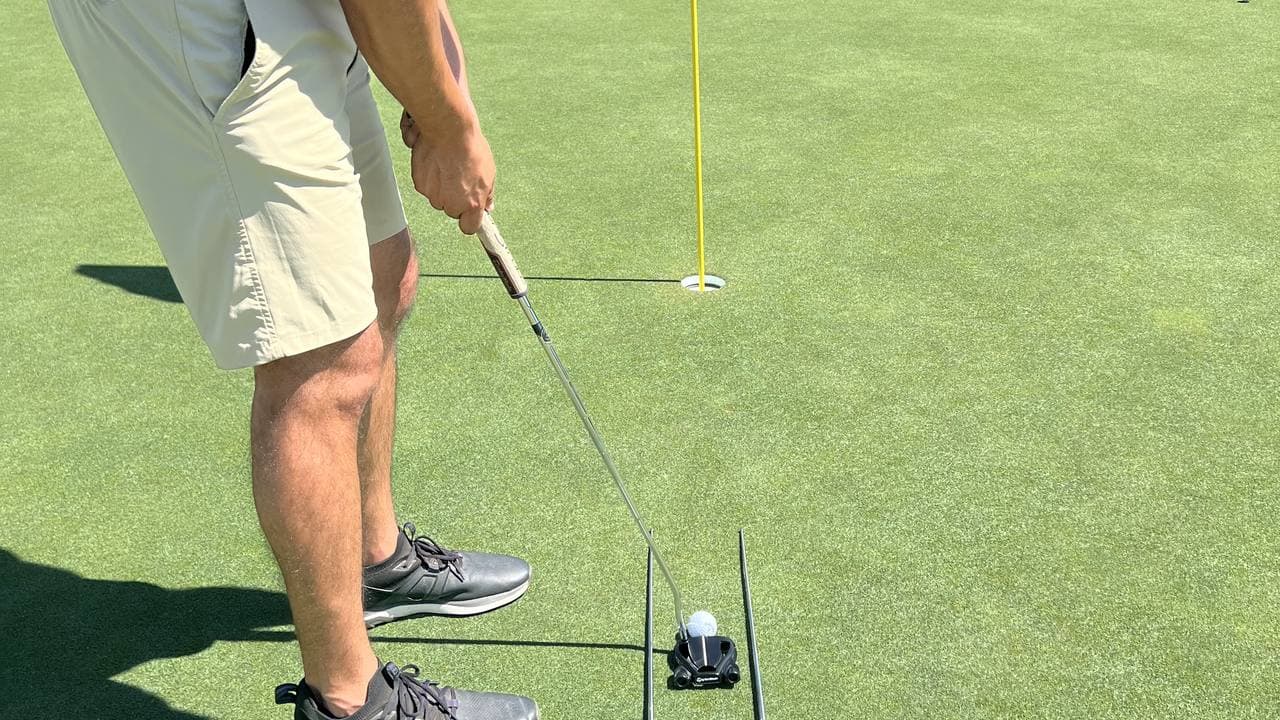
Place two tees just wider than your putter head, about a foot in front of the ball, forming a gate. Roll putts through the gate without clipping either tee. Clip the right tee and your face is open; clip the left and it's shut. Ten clean gates in a row before you move on.
Why it works: it gives instant, unforgiving feedback on the two things you can't see in your own stroke.
Drill 2: The Coin Drill (face at impact)
Set a small coin a few inches ahead of the ball on your target line. Hit putts and try to roll the ball directly over the coin. A square face sends it over the center; an open or closed face misses left or right. This is the cheapest face-control drill in golf.
Drill 3: Alignment Stick Path Drill (stroke path)
Lay an alignment stick down just outside your toe line, parallel to the target. Make strokes that stay parallel to the stick — no fanning the putter open going back or flipping it shut coming through. This is one of the most searched putting drills with alignment sticks for a reason: it's simple and it exposes a wandering path immediately.
The limitation: a stick on the ground tells you about your body line, not what the face is doing at impact. To train path and face together you need a reference surface the putter head actually tracks against — which is the gap most home setups never close.
Drill 4: The Ladder Drill (distance control)
Drop balls and putt to targets at 10, 20, and 30 feet, in order, then back down. The goal isn't to make them — it's to finish every putt within a putter-length of the hole. Distance control, not line, is what kills most amateur rounds. The ladder drill builds the feel for how far back to take the putter for a given distance.
This is also where most golfers practice blind. They have no repeatable reference for "how big a stroke equals 20 feet," so they re-guess it every time. A pace reference — a chart that maps backswing length to roll-out distance — turns guessing into a calibrated, repeatable stroke. (More on that below.)
Drill 5: The Clock Drill (short-putt pressure)
Set six balls in a circle three feet around the hole, like numbers on a clock. Make all six in a row. Miss one, restart. This builds the boring, score-saving skill of never missing the short ones — the putts that actually wreck scorecards.
Drill 6: The One-Handed Drill (release + feel)
Hit short putts with your trail hand only, then your lead hand only. This kills the wrist flip that throws the face out of square and rebuilds a quiet, pendulum release. Two minutes of this resets a hands-y stroke faster than anything else.
Drill 7: The Tempo Count (rhythm under pressure)
Count "one-two" — back on "one," through on "two" — keeping the rhythm identical on a 5-footer and a 40-footer. Most golfers rush short putts and decelerate on long ones. A fixed tempo fixes both.
The mistakes that cancel out your reps
- Practicing only makeable putts. If every rep is a 4-footer at the hole, you train nothing about pace.
- No feedback loop. Rolling balls without a gate, coin, or reference line is just exercise. You need something telling you when you missed and why.
- Random, not structured. Ten minutes of focused gate + ladder work beats an hour of aimless rolling.
- Training line but never pace. Line gets the attention; pace gets the three-putts.
Turning drills into a repeatable system
The reason these drills usually stay scattered is that each one needs a different prop — tees for the gate, a coin for the face, a stick for path, guesswork for pace. AimPutt was built to collapse path, face, and pace into one 36-inch bar so you can run a full practice routine without a green and without a drawer full of gadgets:
- The top rail gives you a true reference for stroke path and a square face — the gate and stick drills in one surface.
- The bottom rail carries a laser-etched pace chart that maps backswing length to roll-out distance, so the ladder drill stops being a guess and becomes a calibrated stroke you can repeat indoors on any flat surface.
If you want the structured version of everything above — a short daily routine that hits start line, face, and distance in 15 minutes — that's exactly what AimPutt is built to do.
Putting practice drills FAQ
How long should I practice putting each day? Fifteen focused minutes beats an hour of aimless rolling. Run two line drills (gate + coin) and one distance drill (ladder), and stop while you're sharp.
Can I practice putting drills at home without a green? Yes. Every drill here works on any flat indoor surface — carpet or a mat. Start line, face control, and stroke path don't need real grass; only true green-reading does.
What's the single best putting drill for a beginner? The gate drill. It trains start line and face square at the same time and gives instant feedback, which is what beginners need most.
Are alignment sticks good for putting practice? They're a solid, cheap way to check your path and body line. Their limit is that they don't tell you what the face is doing at impact — for that you want a reference surface the putter head tracks against.
Why do I three-putt so much even though my line looks good? Almost always distance control, not line. Add the ladder drill and a repeatable pace reference, and three-putts drop fast.
Ready to stop guessing and start practicing with a system? Pre-order AimPutt - buy one, get one free. Estimated shipping is mid-October 2026.
Related reading: DIY Putting Aids: 6 You Can Build at Home · How AimPutt Works