
The 15-Minute Putting Practice Routine That Actually Sticks
A putting practice routine built around the three skills that matter — start line, face, and pace. A 15-minute daily version, a pre-round version, and a weekly structure.
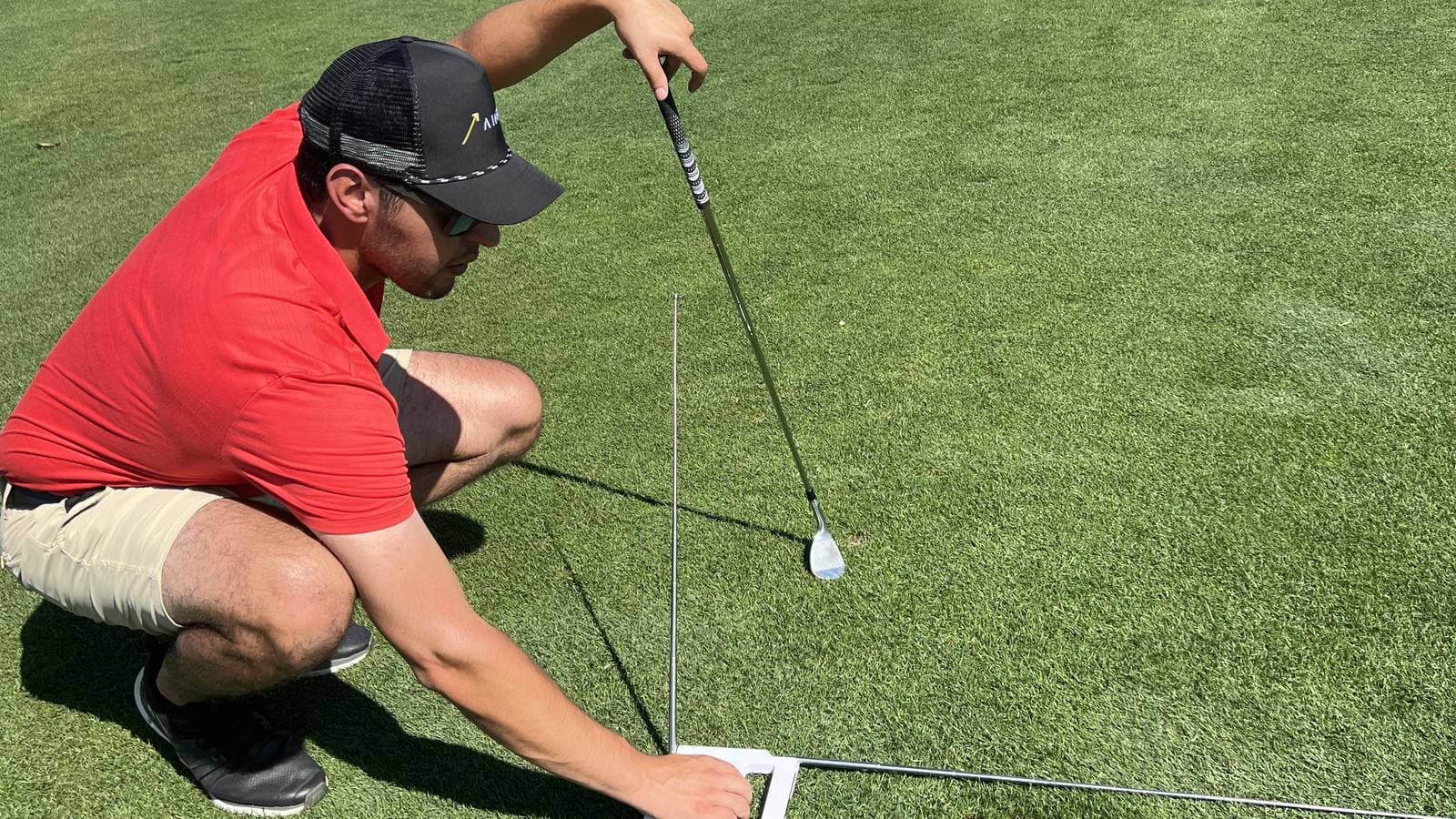
A good putting practice routine isn't measured in hours — it's measured in whether you touch all three scoring skills every time you practice. Most golfers either grind one thing (short makeable putts) or roll balls with no plan at all. This putting practice routine fixes that: a focused 15-minute daily version, a 5-minute pre-round version, and a simple weekly structure so you keep improving instead of plateauing. All of it works at home.
What every putting practice routine has to cover
Putting comes down to three skills, and a routine that skips any of them leaves strokes on the table:
- Start line — does the ball launch where you aimed?
- Face control — is the putter square at impact?
- Pace — does the ball finish the right distance?
The mistake in most routines is spending 90% of the time on start line (because making putts feels good) and almost none on pace — which is what actually causes three-putts. A real routine splits its time on purpose.
The 15-minute daily putting practice routine
Short and structured beats long and aimless — that's deliberate practice, and it's how skills actually stick. Set a timer and run these four blocks:
- Warm-up — 2 min. Ten straight putts from three feet. No target obsession; just feel the stroke and build rhythm.
- Gate (line + face) — 4 min. Two tees a putter-head apart, a foot ahead of the ball. Roll through clean — ten in a row before you move on.
- Ladder (pace) — 6 min. Putt to markers at roughly 10, 20, and 30 feet. Goal isn't to make them — it's to finish each within a putter-length. This is the block most people skip and the one that drops your scores.
- Pressure (confidence) — 3 min. Six balls in a circle three feet around the hole. Make all six; miss one, restart.
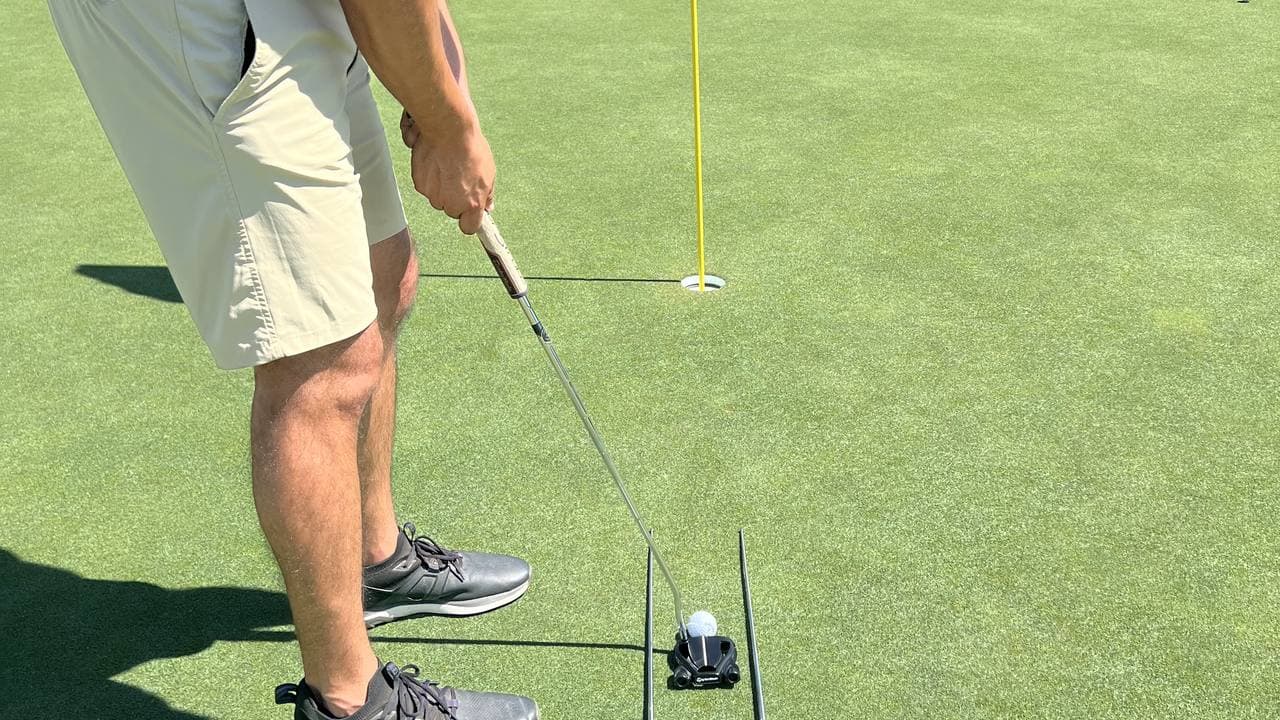
The 5-minute pre-round putting routine
This one is not practice — it's calibration. Before you tee off, you're not trying to fix your stroke, you're learning today's greens:
- Three lag putts from ~30 feet to the fringe (not a hole) — feel today's speed.
- Three putts from six feet — confirm your start line on this surface.
- Finish with three two-footers you'll make — walk to the first tee feeling like the hole is big.
Never grind mechanics right before a round. Calibrate speed, build confidence, go.
A weekly structure so you don't plateau
Running the exact same 15 minutes forever stops working. Vary the emphasis across the week:
- 2 line days — gate + coin, tighten start line and face.
- 2 pace days — ladder + long lag, with most balls outside 20 feet.
- 1 pressure day — the clock drill and "make X in a row or restart" games.
Same building blocks, shifting emphasis. That keeps your weakest skill improving instead of just rehearsing your best one.
Why short and structured wins
The two-hour marathon session feels productive and mostly isn't — fatigue makes your last 50 putts worse than your first 10, and rolling the same makeable putt teaches your brain almost nothing new. Fifteen focused minutes with a clear objective per block builds the skill faster, and you'll actually do it because it fits a real day.
The piece most routines skip
Look back at the routine: line drills are easy to self-check with a gate, but pace has no built-in feedback. You can feel whether a putt finished close, but nothing tells you which size stroke produced it — so pace stays a guess you re-make every session.
That's the gap AimPutt closes. It's a 36-inch 6061-T6 aluminum bar: the top rail trains stroke path and a square face, and the bottom rail carries a laser-etched pace chart mapping backswing length to roll-out distance. The ladder block stops being a guess and becomes a calibrated, repeatable stroke — ten minutes a day, any flat surface.
Putting practice routine FAQ
How long should a putting practice routine be? Fifteen focused minutes beats an hour of aimless rolling. Run a short warm-up, one line block, one pace block, and a pressure block, then stop while you're sharp.
What should a daily putting routine include? All three skills: start line and face (gate drill), pace (ladder drill to varied distances), and a short pressure game. Skipping pace is the most common mistake.
Can I do a putting practice routine at home? Yes — every block here works on a flat indoor surface. Only true green-reading needs a real course. See our guide to putting practice at home.
What's a good pre-round putting routine? Calibration, not mechanics: a few long lags to feel the day's speed, a few six-footers to confirm your line, and a few tap-ins to build confidence before the first tee.
How often should I practice putting? Short daily sessions beat one long weekly grind. Three to five 15-minute sessions a week, with the emphasis rotated between line, pace, and pressure, improves faster than a single marathon.
Ready to make the pace block stop being a guess? Pre-order AimPutt - buy one, get one free. Estimated shipping is mid-October 2026.
Related reading: 7 Putting Practice Drills That Actually Lower Your Scores · Putting Practice at Home · How AimPutt Works