
Putting Alignment Aids: How to Start Your Ball on Line Every Time
Most golfers set up aimed somewhere other than where they think, then make a compensating stroke to save it. Putting alignment aids fix the root cause — how they work and how to start every putt on line.
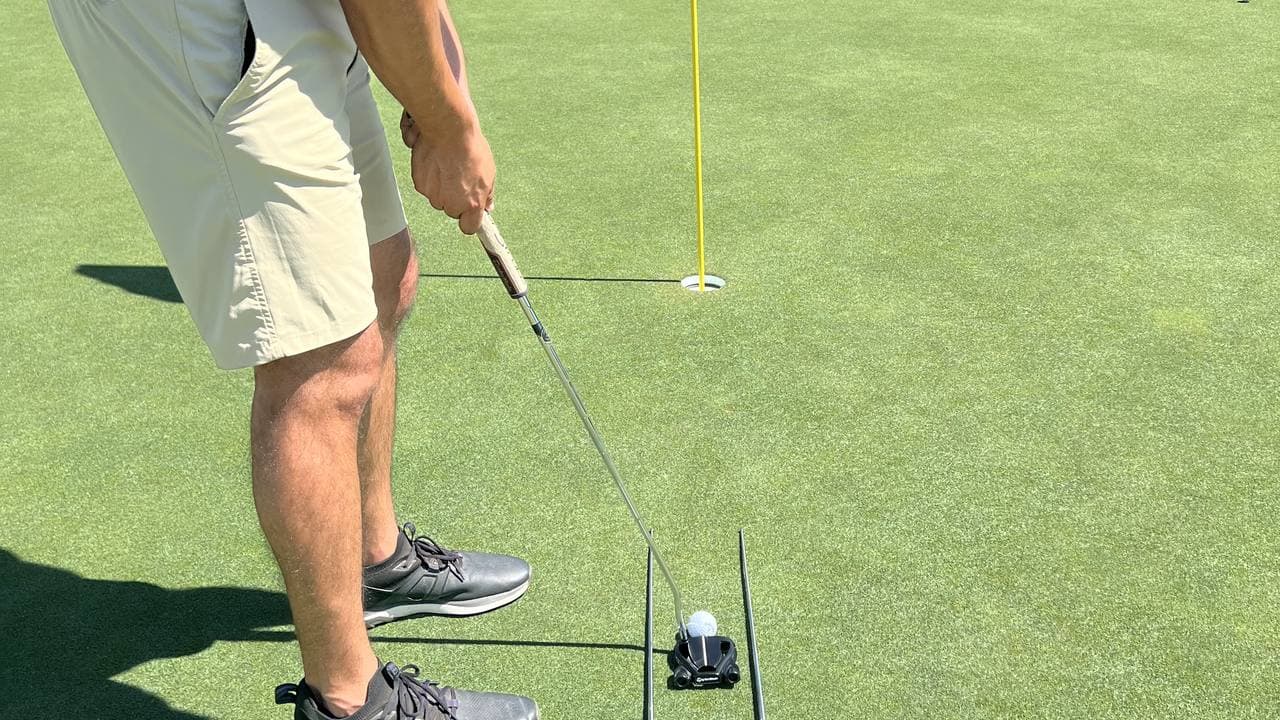
Most golfers set up aimed somewhere other than where they think, then make a subconscious compensating stroke to save it. That is why your line looks fine but the ball starts offline. Putting alignment aids fix the root cause: they get your eyes, your aim, and your start line to agree. Here is how they work and how to start every putt where you meant to.
Why your aim lies to you
Your eyes sit above and to the side of the ball, and that angle distorts your sense of where the putter is aimed. Set up with your eyes inside or outside the ball and "square" looks wrong even when it is right — so you nudge the face to match what looks correct and start the ball offline. It is not a stroke flaw; it is an aim-and-perception flaw, and no amount of stroke practice fixes it.
Types of putting alignment aids
- Ball alignment lines. A drawn line on the ball you aim at the target — helpful, but only as good as your ability to aim the line.
- Start-line sticks and strings. A reference on the ground down your target line to check that the ball starts on it.
- Mirrors. Show whether your eyes and shoulders are square at address — the setup half of aim.
- Gates. Two tees just ahead of the ball that force an on-line start and a square face.
- A rail surface. A reference the putter head tracks against, training aim and a square face together on a real roll.
The drill: prove your aim
Lay a stick or string down your target line, set the ball beside it, and roll putts. Watch whether the ball actually starts on the line. Most golfers are shocked how often it does not — and just seeing the gap starts to correct it.
What alignment alone misses
Getting aimed correctly is only half of starting the ball on line. The face still has to be square at impact to that aim — and a line on the ground cannot tell you what the face is doing when the putter actually moves. That is the gap a rail closes: the top rail of AimPutt gives the putter head a surface to track against, training your start line and a square face together on a real stroke, not just a static setup. (Line is half the putt; for the other half, pace, the bottom rail's pace chart handles distance — see How to Stop Three-Putting.)
Putting alignment FAQ
How do I aim putts correctly? Check it against a reference. Lay a stick or string on your target line, set up, and confirm the ball starts on it — your perception of square is often off until you calibrate it.
Do the alignment lines on a golf ball help? They can, but only if you aim the line accurately, and they do nothing for your face at impact. They are a setup aid, not a stroke aid.
Why do I push or pull my putts even when aimed well? Usually the face is not square at impact, or your eye line distorts your aim so you compensate. Training aim and a square face together fixes both.
Are putting alignment aids worth it? For start line, yes — starting the ball on your intended line is half of every made putt. Just pair aim work with face and pace training, or you fix one third of the putt and leave the rest to chance.
Want to train aim and a square face on every stroke? Shop AimPutt - buy one, get one free. In stock and shipping now.
Related reading: 5 Putting Drills With Alignment Sticks · 7 Putting Practice Drills That Actually Lower Your Scores · How to Stop Three-Putting