
The Putting Aids Pros Actually Use (and What Each One Trains)
The putting aids you see in tour bags and coaching bays aren't fancy — mirrors, gates, tempo trainers. Here's what each one trains, and the through-line that explains all of them.
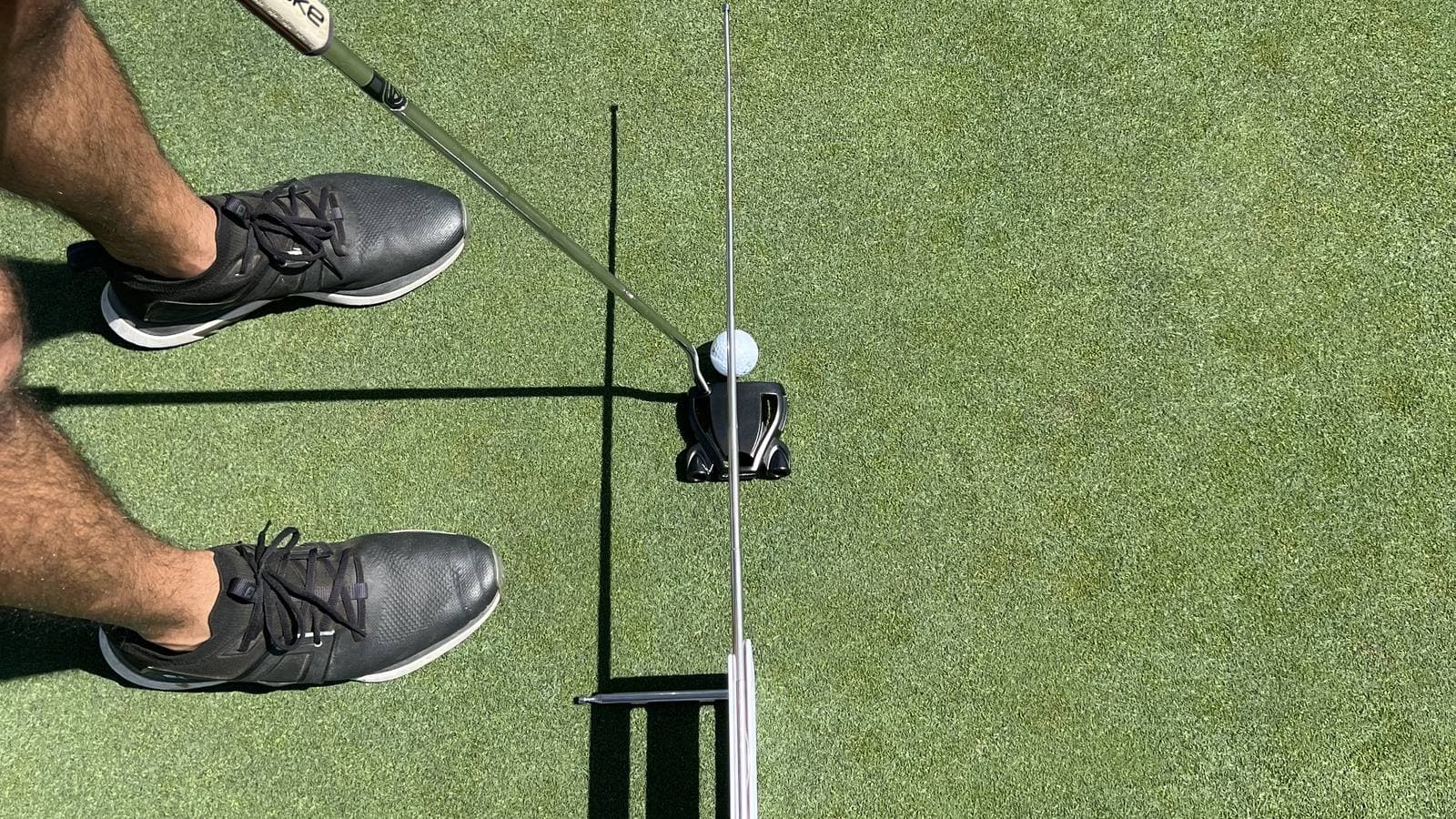
The putting aids you see in tour bags and coaching bays aren't expensive or complicated. They're simple tools that each isolate one part of the stroke and give instant feedback — a mirror, a gate, a tempo trainer, a path board. Below is what the categories of putting aids pros and their coaches actually use, what each one trains, and the through-line that explains why they all exist. Understanding that through-line is more useful than any single product.
The through-line: pros train three things separately
Before the gear, the principle. Good putting is three independent skills — start line, face angle at impact, and pace — and the reason a pro's bag has several small aids is that each one isolates a single variable. Amateurs buy a gadget hoping it fixes "putting." Pros use tools that each fix exactly one thing, with feedback, so they always know what they're working on.
The putting mirror (setup and eye line)
A putting mirror sits on the ground and reflects your eyes and shoulders at address. It's one of the most common aids in coaching because setup errors — eyes inside the ball, shoulders open — cause misses before the stroke even starts. It trains the part of putting that happens before the putter moves.
The gate (start line and face)
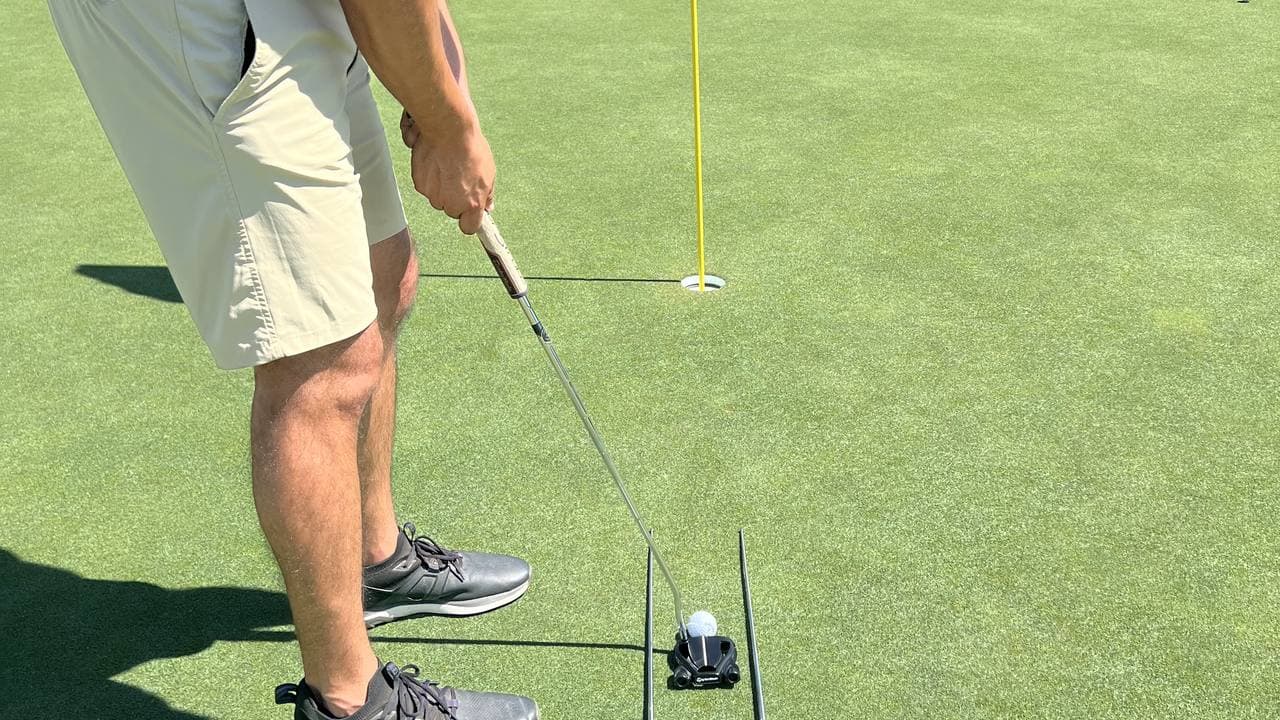
A gate — two tees or a molded gate just wider than the putter, or a ball-width gate ahead of the ball — forces a square face and an on-line start. Clip a side and you get immediate, unforgiving feedback. It's the most universal feedback tool in putting precisely because it's so simple.
The tempo trainer (rhythm)
A metronome or weighted tempo trainer builds a repeatable rhythm — the same beat on a 5-footer and a 40-footer. Tempo is quietly one of the biggest separators: amateurs rush the short ones and decelerate on the long ones, and a consistent tempo fixes both ends.
The path or arc board (stroke shape)
Track and arc boards give the putter a rail or curve to follow, training a consistent stroke shape. They're popular in teaching bays because they turn an invisible motion into something you can see and repeat.
The pace work most amateurs skip
Here's the tell: a huge share of a pro's putting practice is pace — lag putts to a tee, distance ladders, "leave it in the doll's house" zones. Tour players don't make many long putts; they almost never leave themselves a hard second one. Yet pace is the one thing most amateur aids don't train at all. Mirrors, gates, and arc boards are all about line — none of them tell you how far a given stroke rolls the ball.
What the pros' aids have in common
Two things. First, each tool isolates one variable and gives instant feedback — that's what makes practice actually transfer. Second, the best players spend disproportionate time on pace, the skill amateurs ignore. If you're buying putting aids, buy for those principles, not for the gadget that promises to fix everything.
The aid that combines them
Most golfers end up with a drawer of single-purpose props — a mirror here, a gate there, tees, a metronome — and still no real pace reference. AimPutt was built to collapse that drawer into one tool that respects how pros train. It's a 36-inch 6061-T6 aluminum bar: the top rail trains stroke path and a square face — the gate and arc board in one surface — and the bottom rail carries a laser-etched pace chart that maps backswing length to roll-out distance, training the exact skill the pros obsess over and the amateur aids skip. Line and pace, one bar, ten minutes a day.
Putting aids pros use FAQ
What putting aids do pros actually use? Mostly simple, single-purpose tools: a putting mirror for setup and eye line, a gate for start line and a square face, a tempo trainer for rhythm, a path or arc board for stroke shape, and a lot of distance-ladder work for pace.
What's the best putting aid to start with? A gate. Whether it's two tees or a molded version, it trains start line and face square at once with instant feedback — the same reason it shows up in nearly every coaching bay.
Do I need expensive putting aids to improve? No. The aids pros rely on are cheap and simple. What matters is that an aid isolates one skill and gives feedback — and that you actually train pace, not just line. Many drills work with household items at home.
Why do pros practice so much lag putting? Because pace, not line, is what prevents three-putts. Tour players rarely make long putts — they win by never leaving themselves a tricky second putt, which is a trained pace skill.
What's the one thing most putting aids miss? Pace. Mirrors, gates, and arc boards all train line and setup; almost none of them calibrate how far a given stroke rolls the ball, which is the skill that decides most three-putts.
Want the pros' line tools and a real pace reference in one bar? Pre-order AimPutt - buy one, get one free. Estimated shipping is mid-October 2026.
Related reading: 7 Putting Practice Drills That Actually Lower Your Scores · The 15-Minute Putting Practice Routine · How AimPutt Works