
Indoor Putting Greens vs. a Putting Rail: What Actually Improves Your Stroke
An indoor putting green and a putting rail train different skills. Buy the wrong one for your problem and you'll spend money without dropping strokes. Here's exactly what each one trains.
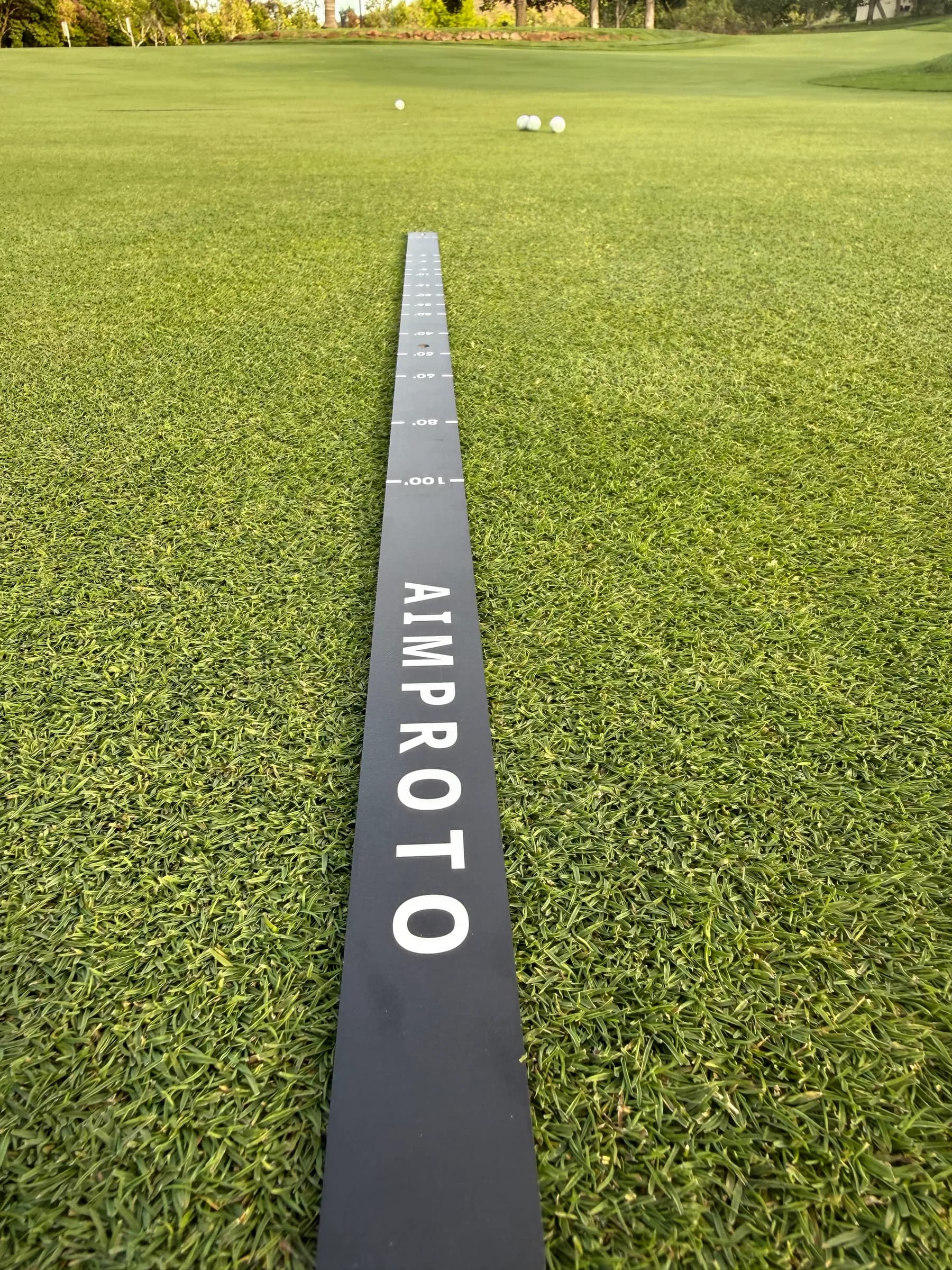
Indoor putting greens look like the ultimate home upgrade. But a green and a putting rail train two different skills, and if you buy the wrong one for your problem you will spend real money without dropping a single stroke. Here is exactly what each one trains, and how to tell which you actually need.
What an indoor putting green trains
A good indoor green gives you a rolling surface, a hole, and — on contoured models — some break to read. That makes it useful for pace feel over distance, repetition, and building a habit. If you already make a solid stroke and just need reps and speed feel, a green delivers that.
What a green doesn't train
Here is what a green quietly leaves untouched: it does not tell you whether your stroke path is straight, whether your face is square at impact, or how big a stroke produces a given distance. You can roll a thousand putts on a beautiful green and never learn why you missed — only that you did. A green gives you a surface and a result, not the cause.
What a putting rail trains
A putting rail works on the cause. The top rail gives the putter head a surface to track against, training stroke path and a square face together. The bottom rail carries a laser-etched pace chart that maps backswing length to roll-out distance — so pace stops being feel and becomes a number you can repeat. And it works on any flat surface, no green required.
Which one do you actually need?
- Your stroke is solid, you just misjudge speed on real greens → a green helps you rehearse pace and reading.
- Your stroke itself is inconsistent (true for most amateurs) → fix the mechanics first with a rail; a nicer surface only lets you repeat a flawed stroke more comfortably.
The most efficient setup is not either-or: train the mechanics and pace with AimPutt on any flat floor, and if you love rolling putts, add a green for reps. Mechanics first, surface second.
Indoor putting green FAQ
Are indoor putting greens worth it? For pace feel and reps, yes — if your stroke is already sound. If your path, face, or pace calibration are the problem, a green will not fix them, and that is where most amateurs lose strokes.
Do indoor greens help you read putts? Contoured greens give some break to practice, but real green-reading needs varied slope, grain, and speed you only get on a course. Greens are better for pace than reading.
Is a putting green better than a mat? A green usually adds break and a truer roll; a flat mat is simpler and cheaper. Neither trains your stroke path, face, or pace — that gap is the same for both.
Green or rail first? Rail first. Train a repeatable stroke and calibrated pace, then use any surface — green, mat, or floor — to log reps.
Want to fix the stroke, not just roll more putts? Pre-order AimPutt - buy one, get one free. Estimated shipping is mid-October 2026.
Related reading: Best Putting Mats for Home Practice · Putting Practice at Home · How AimPutt Works