
Golf Practice at Home: Build a Full-Swing Station in Any Garage
You can build most of your golf swing at home with a net, a mat, and a way to see what your swing is doing. How to set up a full-swing station, what you can and can't train, and a routine that makes reps count.
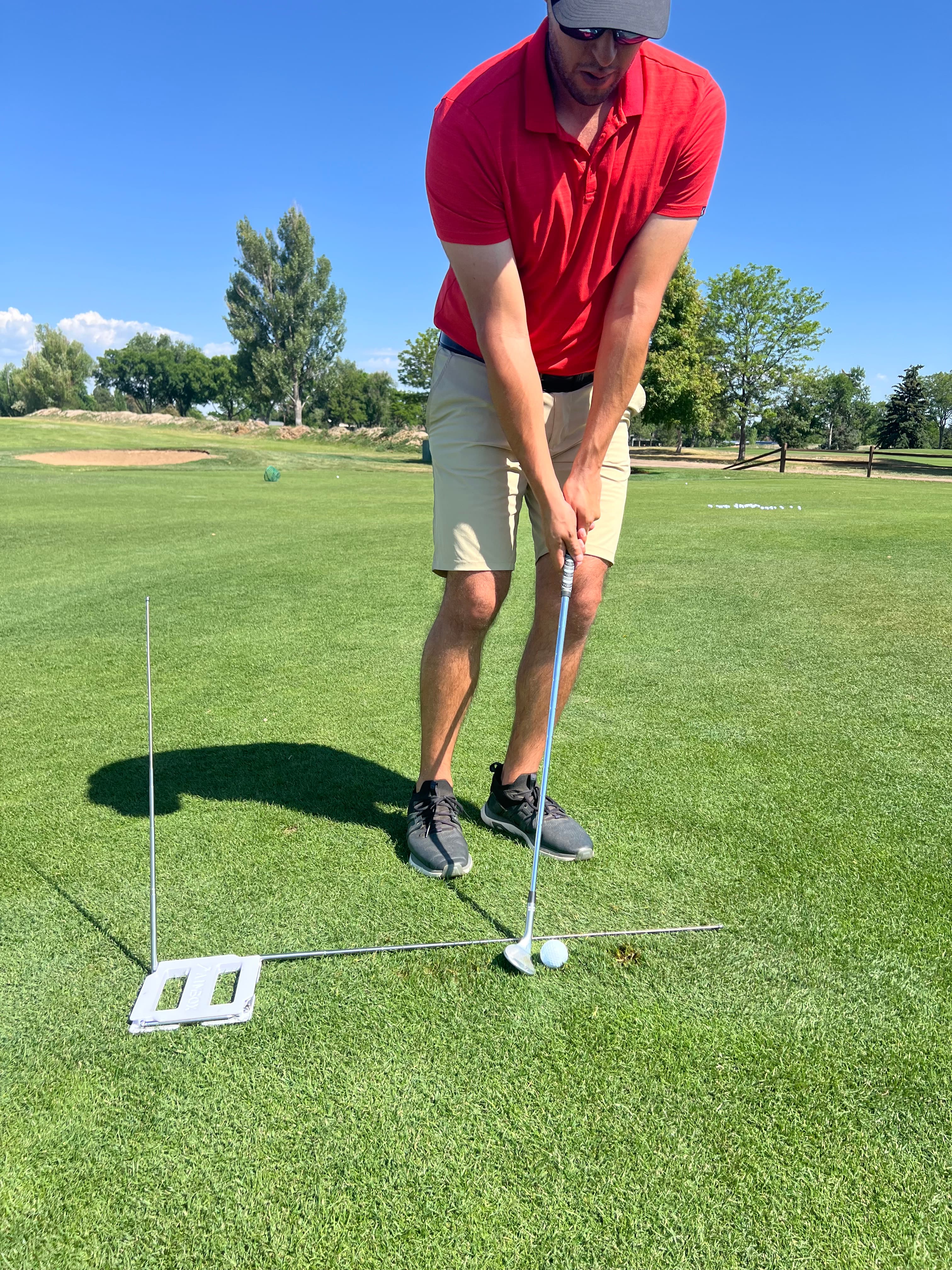
You can build most of your golf swing at home — you just need a net, a mat, a ball, and a way to see what your swing is actually doing. Here is how to set up a full-swing practice station in a garage or backyard, what you can and cannot train indoors, and how to make the reps count instead of grooving your worst habits.
What you can (and can't) train at home
On a net and mat you can fully train the mechanics behind most of your swing:
- Setup and alignment — where you aim before you move
- Path — the direction the club travels through the ball
- Ball position and low point — with a strike reference
- Contact — face tape or foot spray tells you where you struck it
- Tempo and speed
What you cannot train at home is full ball flight — shot shape and carry past the first few feet — unless you add a launch monitor. Everything else is fair game in a garage.
The gear that matters (and what doesn't)
A net, a hitting mat, and a strike reference (face tape or dry-erase spray) cover the essentials. A launch monitor is a nice upgrade, not a requirement. The one thing people skip is the part that matters most: a visual reference for path and alignment, because without it you are hitting into a net with no idea whether your pattern is improving or degrading.
The feedback problem at home
Here is the trap of home practice: hitting into a net feels productive, but with no ball flight and no reference, you are just repeating whatever you already do — good or bad. You need something telling you about your path, face, and setup, since you cannot watch the ball curve.
Set up a station in 10 minutes
- Net a safe distance back, mat squared to it.
- Lay AimBox down to build an alignment corridor and a ball-position reference — so every rep starts from the same setup and trains the same path.
- Face tape or foot spray on the clubface to check contact.
Now every swing has feedback: aim from the rods, path through the corridor, strike from the tape.
A simple at-home routine
- 5 min — setup and alignment. Check aim and ball position against the reference.
- 10 min — path, half speed. Rehearse the club through the corridor without clipping it, then add half swings.
- 10 min — speed and contact. Full swings, checking the strike pattern on the tape.
Golf practice at home FAQ
Can you actually get better at golf at home? Yes. Setup, alignment, path, contact, tempo, and speed all train indoors — that is the majority of the swing. Only true ball-flight feedback needs the range or a launch monitor.
Do I need a launch monitor to practice at home? No. A net, a mat, a strike reference, and a visual alignment reference cover most swing work. A launch monitor adds data, not fundamentals.
How much ceiling height do I need? Enough to make a full swing with your longest club without clipping anything — most golfers need roughly 9 to 10 feet. If you are tight, train with shorter clubs and half swings.
What is the most important thing to train at home? Setup and path, because you cannot see ball flight. A reference that shows aim and path is what keeps net practice from grooving your faults.
Ready to build a station that gives you feedback, not just reps? See AimBox — alignment, path, and ball-position references in one compact, fold-flat tool that travels from garage to range.
Related reading: Best Golf Swing Training Aids of 2026 · Golf Chipping Drills and Aids · Putting Practice at Home