
How to Swing In-to-Out: 5 Reasons It Fixes Your Slice (and 4 Drills)
What an in-to-out swing path is, five reasons to master it, and four drills to train it without turning your slice into a push or a hook.
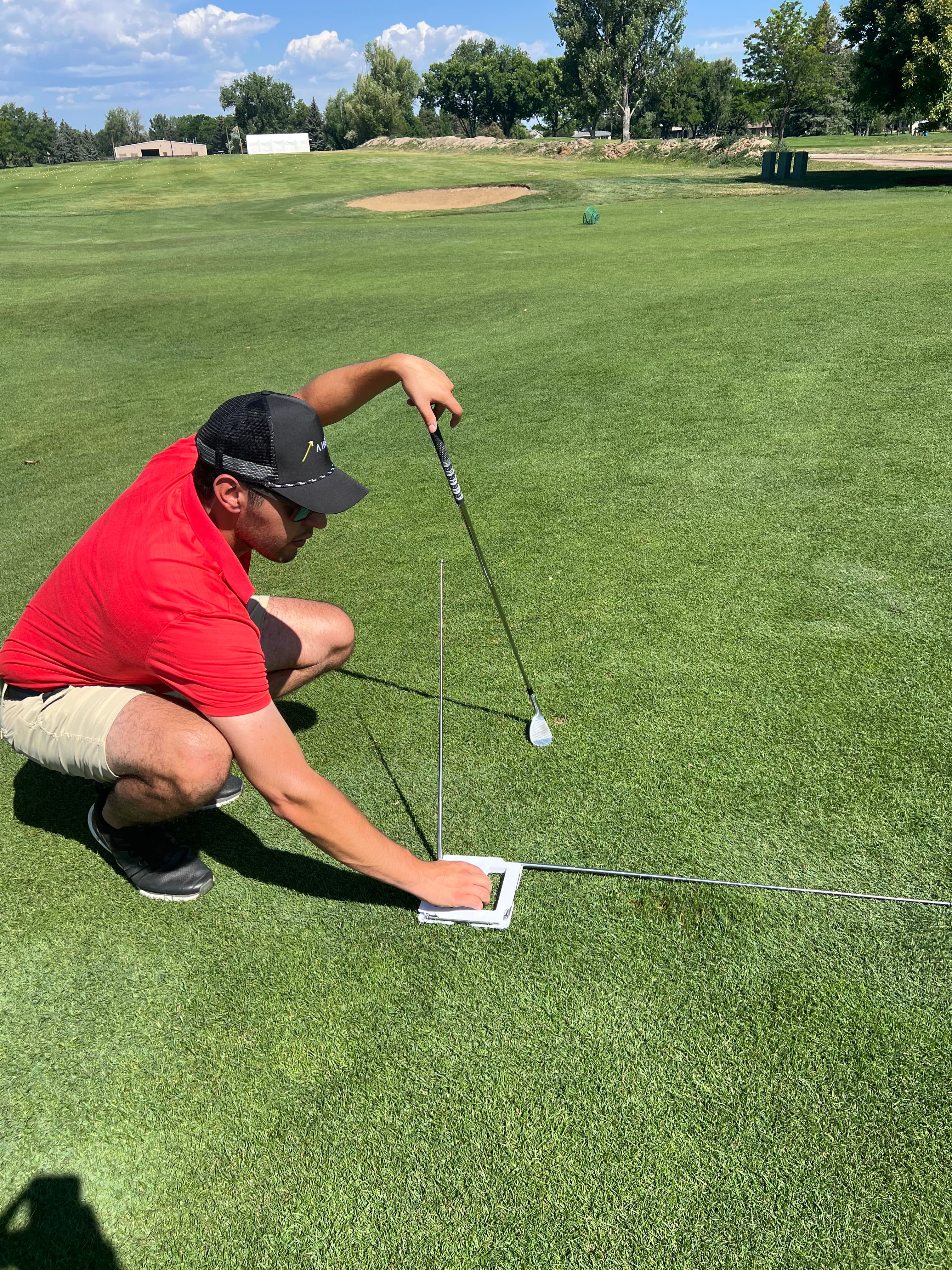
Most slices start the same way. The club comes from outside the target line, cuts across the ball, and the face is open to that path at impact. Swinging in-to-out fixes the first half of that. Below: what the path actually is, five reasons it's worth learning, four drills to train it, and how to stop it turning into a push or a hook.
What does in-to-out mean?
Draw a line through the ball to your target. On an in-to-out downswing, the club comes into the ball from inside that line (the side closer to your feet) and leaves it heading outside. For a right-handed golfer, the club is moving a little right of the target at impact. Left-handers, flip everything in this guide.
Out-to-in is the opposite: the club arrives from outside the line and cuts across to the left. That's the path behind most slices and pulls.
Path is only half the story, though. Where the face points at impact sets most of the start direction, and the gap between face and path sets the curve:
| Path | Face at impact | Ball flight (right-handed) |
|---|---|---|
| Out-to-in | Open to the path | Slice |
| Out-to-in | Square to target | Pull |
| In-to-out | Slightly closed to the path, open to the target | Draw |
| In-to-out | Open to the path | Push or push-fade |
| In-to-out | Very closed to the path | Hook |
So every drill here trains the path and also checks the face.
5 reasons to master the in-to-out swing path
1. It goes after the cause of your slice. Out-to-in is where most slices begin. Get the path to neutral or a touch in-to-out and you've removed the cut-across motion that puts slice spin on the ball.
2. It's how you hit a draw. An in-to-out path with the face slightly closed to it starts the ball right of target and curves it back. Plenty of golfers chase that shot for years without changing their path.
3. Contact usually gets better. Coming over the top steepens the club and moves contact toward the heel or the top of the ball. Swinging from the inside tends to shallow the club out, and solid, centred strikes get easier.
4. You stop missing both ways. An out-to-in swing can give you a pull that starts left and a slice that curves right, sometimes on back-to-back shots. With an in-to-out path and a face you control, the start line is predictable and the misses get smaller.
5. It fixes your sequence. You can't swing from the inside if your shoulders start the downswing. Learning the path teaches your lower body to go first and your arms to drop into the slot, and that carries over to every club.
4 drills to train an in-to-out path
Drill 1: the alignment gate
Build a corridor for the club. With AimBox, turn two rods into a gate just in front of the ball, angled a few degrees right of your target line (right-handed). If you only have alignment sticks, lay one on your target line and one along your feet.
Start with slow half swings and try to get the club through the gate without touching the outside rod. Then speed up. Clipping the outside rod means you're still coming over the top.
Drill 2: the headcover outside the ball
Put a headcover or a folded towel about a hand's width outside the ball and slightly behind it. Come over the top and you'll hit it. Swing from the inside and you won't.
Use a 7-iron and half swings. If you keep hitting the headcover, feel your trail elbow stay closer to your side as you start down.
Drill 3: the closed stance
At address, pull your trail foot back a few inches so your stance points a little right of target, with the clubface still aimed at the target. It's much easier to turn behind the ball and swing out to the right from here.
Hit ten balls like that, then go back to a square stance and try to copy the feel.
Drill 4: the pump drill
Swing to the top and stop. Start down slowly, letting your hands drop toward your trail pocket while your chest stays turned away. Go back to the top, do it again, then swing all the way through on the third pump.
It's the sequence in slow motion: lower body first, arms dropping inside, then the release.
Don't forget the clubface
Say your path gets better but the ball starts right and stays there. That's a push: the face is open to the new path. If it starts right and hooks hard left, the face is closing too much.
Rehearse the drills with AimDisk clipped to the shaft. It turns with the clubface, so while you're grooving the new path you can see whether the face is square at the top and at impact. The clubface awareness drill covers the three checkpoints.
A 15-minute in-to-out practice plan
| Minutes | What to do |
|---|---|
| 0–3 | Pump drill, no ball |
| 3–8 | Alignment gate, half swings, 7-iron |
| 8–12 | Headcover drill, three-quarter swings |
| 12–15 | Full swings: alternate closed and square stance, and watch where each ball starts |
Keep score. Out of ten balls, how many start right of target and curve back toward it? That number should go up week by week.
In-to-out swing path FAQ
What does in-to-out mean in golf? The club comes into the ball from inside the target line and leaves heading outside it. For a right-handed golfer, the path points a little right of target at impact.
Does an in-to-out swing fix a slice? It fixes the path half of most slices. You still need a clubface that isn't open to the new path, or the ball starts right and stays right.
Why do I hook the ball with an in-to-out path? The face is closing too much compared with the path. Keep the path and quieten the release, and check the face at impact.
Can you swing too much in-to-out? Yes. A path way out to the right brings pushes and hooks. You want a few degrees in-to-out, not a big loop.
What's the best drill for an in-to-out swing path? The alignment gate. You see the path before you swing, and it tells you straight away when the club comes over the top.
Related reading: Fix Your Slice with the Over-The-Top Drill · Why Slice Fixes Do Not Stick · The Clubface Awareness Drill