
The Clubface Awareness Drill: Why Golfers Tape Hula Hoops to Their Clubs (and a Better Way)
Where your clubface points decides where the ball starts, but almost nobody is taught to watch it. Here's the hula hoop drill that went viral, the three checkpoints it teaches, and how to run it without the hoop.
Do you ever think about where your clubface points? Most golfers don't. They are taught grip, stance, plane and path, and the face is left to sort itself out. But the face is what sends the ball. Titleist's Learning Lab, citing TrackMan data, puts it at roughly 75% of a ball's starting direction with an iron and about 85% with a driver. The path decides the rest. If your misses start in the wrong place, the face is usually the first suspect.
Why you can't feel your clubface
A full swing takes about a second, and the clubhead is at the far end of a 40-inch lever moving faster than your eyes can follow. You never see the face during the swing, so you never learn what open, square and closed actually look like. You only see the result: a ball curving away from where you aimed. Then you try to fix the result with your body, and the slice-fix carousel begins. (More on that in Why Slice Fixes Don't Stick.)
The most common pattern is simple: amateurs fan the face open in the takeaway, then spend the downswing trying to save it. Sometimes they square it, sometimes they flip it closed, and the ball goes anywhere.
The hula hoop drill that went viral
Golf coaches found a cheap way to make the face visible: zip-tie a hula hoop to the shaft just above the clubhead. The hoop sits in line with the face, so it turns whenever the face turns. Suddenly that tiny clubface becomes a 30-inch disc you can read from anywhere in your swing.
The drill works because it gives you feedback you can see on every rep. You don't need a camera, a launch monitor or a coach standing next to you. You just watch the hoop.
The three checkpoints
Make slow rehearsal swings and stop at each position. The ring (or hoop) tells you what the face is doing.
1. Takeaway (hip height). The ring should turn with your chest. If it has fanned open behind you, your face has too. This is the fault the drill catches most often.
2. Top of the swing. The ring should point down toward the ground, not up at the sky. Pointing at the sky means the face is wide open, and you'll have to save it on the way down.
3. Impact. Swing down slowly and return the ring to where it was at address. No flip, no scramble. Hold the finish and check it.
A 10-minute clubface session
- Clip on and set up square with a 7-iron. Looking down at address, the ring's thin edge should point at your target.
- Five slow rehearsals. Half swings in slow motion, stopping at each checkpoint to read the ring.
- Five chips with it on. Watch the ring through the stroke; a square ring at impact means a square face.
- Five full shots with the same feel. Watch where each ball starts, not where it ends up. Start line is the face talking.
Repeat the block two or three times. Short, focused reps beat a bucket of balls hit on autopilot.
What the drill shows you
- Ring fans open early: your face is open from the start. Expect pushes and slices.
- Ring points at the sky at the top: an open face at the top. You're relying on timing to square it.
- Ring flips past square at impact: the hands are rolling over to save it. Expect pulls and hooks.
- Ring matches the checkpoints: your face is under control, and your misses are now about path, which is a much easier fix.
The problem with a hula hoop
The idea is great. The hoop is not. A 30-inch hoop catches your legs and drags along the turf. You need zip ties and scissors, and switching clubs means cutting it off and tying it on again. It doesn't go in your golf bag, and you won't take it to the range twice.
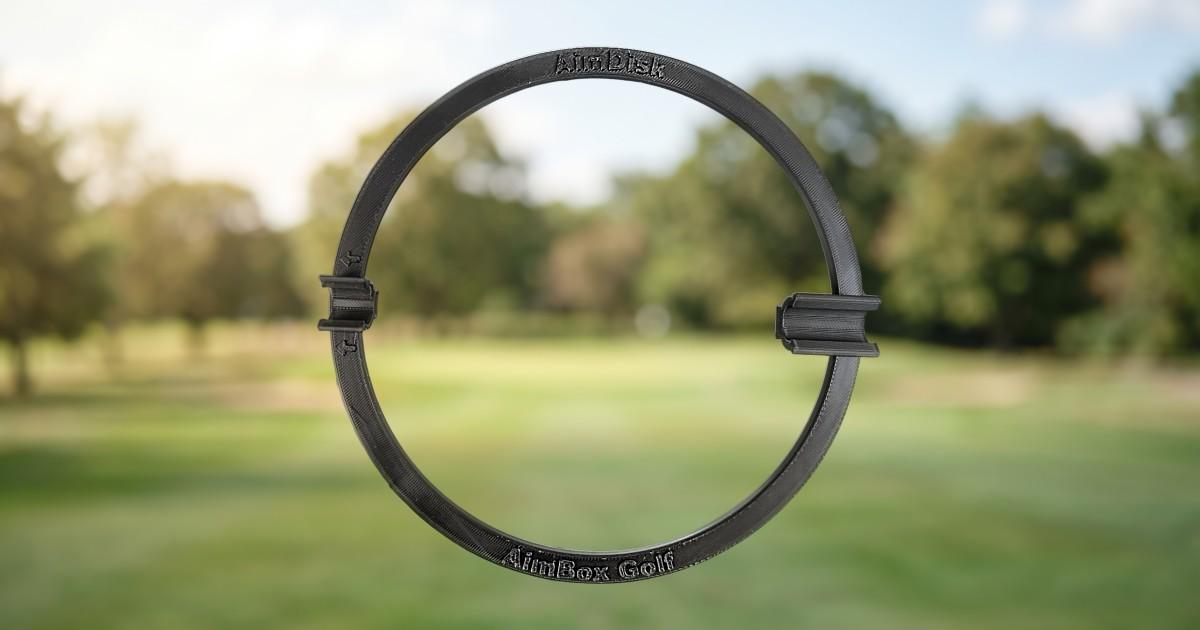
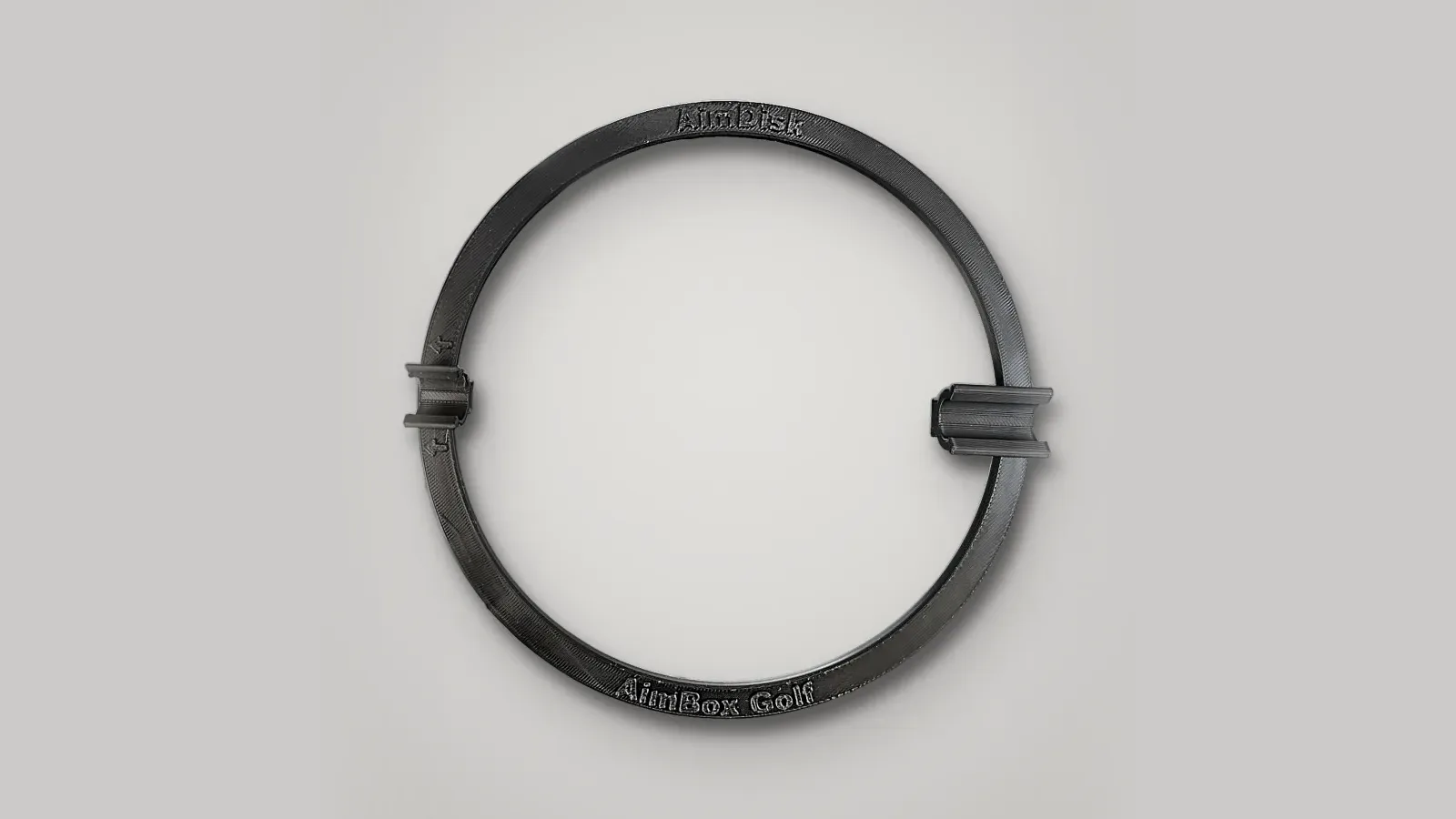
That's why we built AimDisk: the same feedback in a 7-inch matte black ring that clips onto your shaft in seconds and moves to any club in your bag, driver to wedges. It is 3D-printed in-house by AimBox and made for rehearsal swings and chips.
Clubface awareness FAQ
What is clubface awareness? Knowing where your clubface points at each stage of the swing: takeaway, top and impact. Since the face sets most of the ball's starting direction, it's the most important thing in your swing that you can't see.
How do I know if my clubface is open at the top? Use a visual reference on the shaft. With AimDisk or the hoop drill, the ring should point toward the ground at the top. If it points at the sky, your face is open.
Does the hula hoop drill work? Yes. It works because it makes the face visible and gives you feedback on every rep. The downside is the hoop itself: it's big, it needs zip ties, and it doesn't travel.
Can I hit balls with a clubface trainer on? It depends on the trainer. AimDisk is built for rehearsal swings and chips. You can make full swings with it on, but the impact of striking a ball can crack or break the ring over time, so unclip it for full shots if you want it to last.
How often should I practice clubface awareness? Ten minutes, three or four times a week, is plenty. The goal is to build a feel you trust, then test it on full shots with the trainer off.
Want to see your clubface on every rehearsal swing? Get AimDisk, the 7-inch clip-on clubface trainer. In stock and shipping now. Already have one? Read the AimDisk guide, with a large-print PDF to print.
Related reading: Fix Your Slice With the Over-the-Top Drill · Why Slice Fixes Don't Stick · Best Golf Swing Training Aids of 2026