
Golf Fitness: 7 Exercises for a Stronger, Safer Swing
Seven golf fitness exercises for core stability, rotation, hips, posterior chain and balance, with sets, reps and a 20-minute routine you can do at home.
The golf swing asks you to hold a posture, turn hard around it and keep your feet quiet while the pressure moves under them. Most amateurs lose one of those three somewhere in the downswing. The seven exercises below go after each one. You can do all of them at home with a mat, one light dumbbell and a resistance band.
We used to have a separate short post for each exercise. They're all here now, in one place, with what each one trains and how to do it properly.
How to use this routine
Two or three sessions a week is plenty, about 20 minutes each. Do them on days you're not practicing, or cut it down and use it as a warm-up before the range.
Go slow. Every exercise on this list works better clean than heavy, and a tidy 20-second plank beats a sagging two-minute one every time. The sets and reps are starting points: when the last set still feels controlled, add a few reps or a few seconds the next week.
One rule I don't bend: effort is fine, sharp pain isn't. If you already have back, hip or knee pain, see a physio or doctor before you start. These are general strength exercises, not treatment.
1. Plank: trunk stability
Hold a straight line from your shoulders through your hips to your feet, resting on your forearms or hands. Keep your ribs down, squeeze your glutes a little and keep breathing. If your hips sag or pike up, the set's over. Start with 3 holds of 20 to 30 seconds.
It looks too simple to matter, but this is the stability you rotate around. Without it you collapse, sway or lose the club at the top, and contact suffers.
2. Russian twist: rotational control
Sit tall, lean back slightly and turn your torso from side to side, holding a light weight if you have one. Turn your shoulders, not just your arms.
Fast isn't the point. Rotate under control, keep your chest up, and stay in a range that doesn't bother your back. Start with 2 to 3 sets of 8 to 10 turns per side.
The twist works your obliques, the muscles that let you turn, resist and pass energy up through the swing.
3. Leg raise: lower-core control
Lie on your back and lift your legs while keeping your trunk quiet. The mistake everyone makes is letting the lower back arch off the floor. Bend your knees if you need to, and slow down the moment momentum takes over. Start with 2 to 3 sets of 8 to 12.
Your lower abs and hip flexors connect what your legs do to what your shoulders do. When they tire, posture goes, and you'll usually notice it late in a range session or on the back nine.
4. Dumbbell side bend: side-core strength
Hold a light dumbbell in one hand, bend sideways at the waist, then come back up tall. Don't twist and don't rush. Distance doesn't matter here; control on the way down and the way up does. Start with 2 sets of 10 per side.
This hits the obliques from a different angle. They're working through rotation, side bend and impact, and when they're strong you stay organized as pressure shifts instead of getting pulled out of posture.
5. Hips and glutes
The hips and glutes do most of the work in a golf swing. They start the rotation, hold your balance and move force from the ground into the club. The small rotator muscles control how each leg turns in its socket, and when they're weak or stiff the body slides, sways or stands up through impact.
Pick two of these each session: clamshells, lateral band walks, single-leg glute bridges or slow split squats. Use light resistance and good form before you add load. Start with 2 sets of 10 to 12 per side.
Strong hips make it much easier to hold posture and repeat the same setup, and they let the turn come from your hips instead of your lower back.
6. Posterior chain: power and a healthier back
Your posterior chain is the back side of your body: glutes, hamstrings and lower back. It holds your posture and drives your hips through the ball.
Glute bridges, hip hinges, Romanian deadlifts and slow back extensions all build it. Move slowly enough to feel the right muscles working, and keep your spine long on every hinge. Start with 2 to 3 sets of 8 to 10.
When this chain is weak, the swing borrows motion from the lower back and knees. You lose power, and long practice sessions start to hurt. If you play a lot and only have time for one block, make it this one.
7. Balance and ankle stability: the base
Balance in golf isn't standing still. It's staying in control while pressure moves from foot to foot. Your ankles manage that shift and the force you push into the ground, and when they're unstable the rest of the swing compensates with sway, early extension or thin contact.
Start with single-leg balance: 3 holds of 30 seconds on each side, then try it with your eyes closed (it's harder than it sounds). Add 2 sets of 12 slow calf raises, a few split-stance holds and some slow-tempo rehearsal swings. You're after the feeling of pressure moving without your base moving with it.
A 20-minute golf fitness session
| Block | Exercises | Time |
|---|---|---|
| Warm-up | Easy walking, arm circles, slow hip hinges | 3 min |
| Core | Plank, Russian twist, leg raise, side bend | 7 min |
| Hips and back | Two hip and glute moves, glute bridges or a light Romanian deadlift | 6 min |
| Base | Single-leg balance and calf raises | 4 min |
Rotate the hip and glute moves from one session to the next. Before a round, run a short version: one set of each core move, then the balance block.
Take it to the range
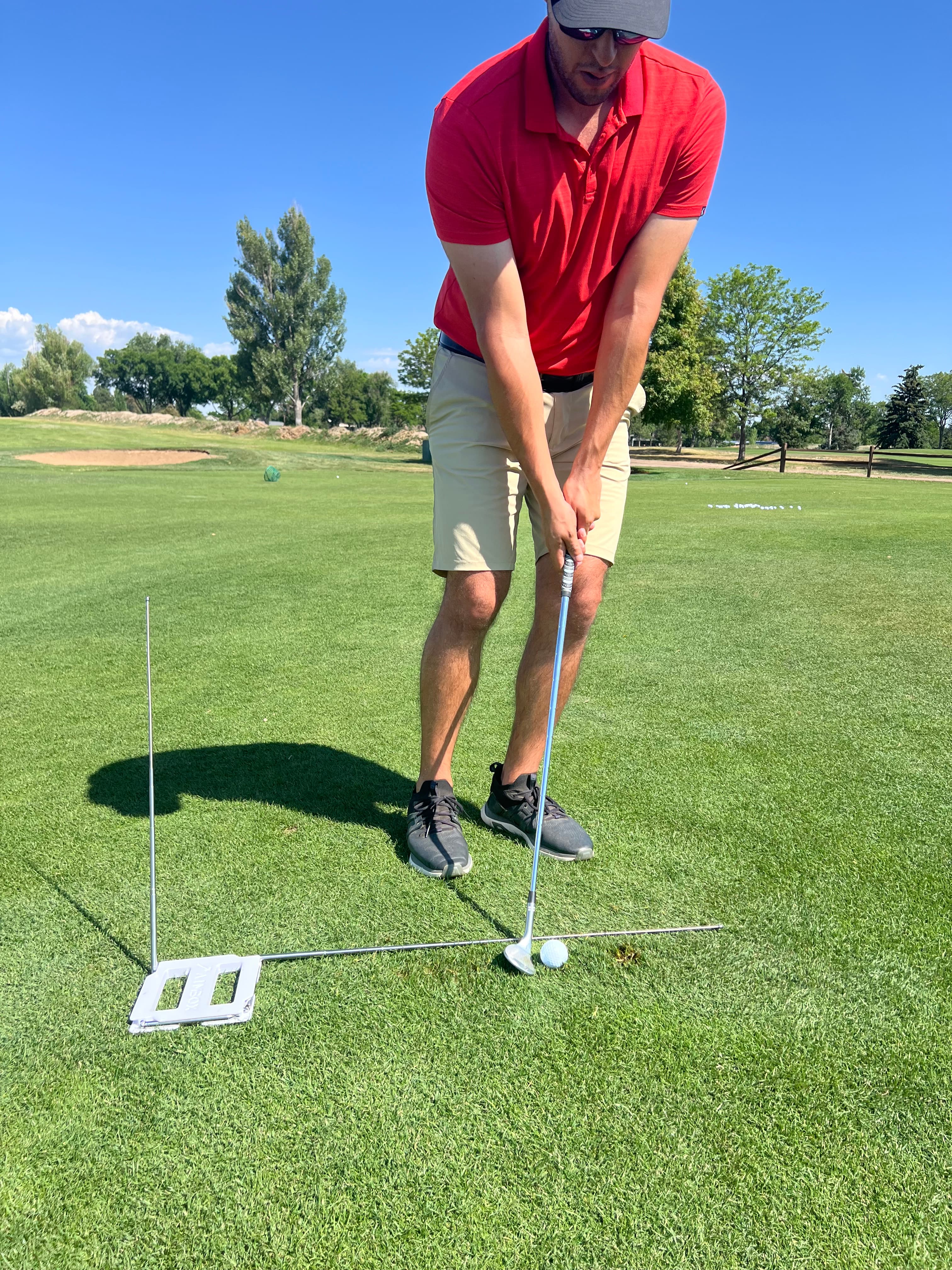
Getting stronger only helps if the swing it supports is repeatable. After a session, set up AimBox and check your alignment and path. For mobility, the golf stretching guide pairs well with this routine, and if your wrists are the weak link, add the wrist mobility and strength drills.
Golf fitness FAQ
What exercises are best for golfers? Start with core stability (plank, side bend) and rotational control (Russian twist), then add hip and glute strength, posterior chain work like bridges and hinges, and balance training. Between them they cover the posture, the turn and the base your swing depends on.
How often should golfers do core exercises? Two or three times a week is enough for most golfers. Keep sessions to about 20 minutes and leave a day between them.
Do I need a gym for golf fitness? No. A mat, one light dumbbell and a resistance band cover everything in this guide.
Can golf exercises help with back pain? A stronger core, glutes and posterior chain take load off your lower back when you swing. If you already have back pain, see a physio or doctor first: these are general strength exercises, not treatment.
Should I do these before or after practice? Use a short version as a warm-up (one set of each core move plus the balance block). Save the full session for days you're not practicing, or do it after.